
Key Takeaways
- A muscle imbalance can develop gradually through repeated daily habits, sport, work routines or previous injuries.
- Feeling tighter on one side does not always mean there is an injury, especially when the difference is mild and does not affect daily function.
- Recurring tightness may involve more than the area that feels uncomfortable, so looking at how the whole body moves can reveal contributing factors.
- Assessment can help identify where extra load, restriction or compensation is occurring so treatment can address the cause rather than only providing short-term relief.
Introduction
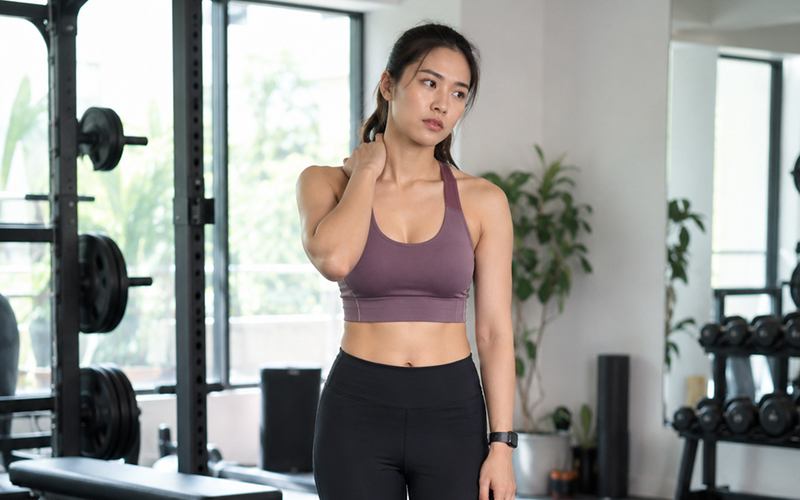
It is quite common for one side of the body to feel tighter than the other. You might notice that one shoulder feels more restricted, one hip does not move as freely, or one leg always seems harder to stretch. It can be frustrating, especially when the tightness keeps coming back even after stretching or self-massage.
It is also worth remembering that feeling tight does not necessarily mean a muscle is physically shortened or that a muscle imbalance is definitely present. The sensation can have several possible contributors, which is why we look at how the area behaves during movement rather than judging it from tightness alone.
At Sports Massage Clinic, we often find that the issue involves more than one muscle. The way you sit, work, exercise and move throughout the day may influence how each side of your body handles movement and load. An old injury can also leave behind habits that continue long after the original pain has settled.
That is why we do not focus only on the area that feels tight. We look at how your body moves as a whole, compare both sides and assess what may be contributing to the difference.
Common Reasons One Side Feels Tighter Than the Other
Daily Habits Can Create Muscle Imbalances
Small habits can have a bigger effect when you repeat them day after day.
You might carry your work bag on the same shoulder, cross the same leg when sitting, lean into one hip while standing, or keep your computer screen slightly off to one side. On their own, these habits may not seem significant. Over time, though, they can place different demands on each side of the body.
For example, we may see an office worker whose right shoulder always feels tighter. When we look at their daily routine, we might find that they use a mouse on the right, carry a laptop bag on the same side, and regularly turn towards a second monitor. The shoulder is not necessarily the only issue. It may simply be the area where the repeated load is becoming most noticeable.
Massage can help reduce the tension, but if the same habits continue, the tightness may keep returning. That is why we also look at the positions and routines that may be contributing to it.
These repeated positions do not mean your posture is necessarily "wrong", nor does your body need to be perfectly symmetrical. We are more interested in whether certain habits repeatedly leave one side feeling restricted or uncomfortable, and whether changing those habits could reduce the demand on that area.
Previous Injuries Can Change the Way You Move
An old injury can continue to affect the way you move even after the pain itself has gone.
When an area hurts, the body often finds ways to protect it. You may shift more weight onto the other leg, avoid certain shoulder movements, or rely more heavily on one side during exercise. Over time, those adjustments can become part of your normal movement without you realising it.
For example, we may see someone who previously had pain in the right knee but now notices recurring tightness in the left hip or lower back. When we assess movements such as a squat or step-down, we may find that they still shift more load to the left side, even though the original knee pain has settled.
In cases like this, the area that feels tight is only part of the picture. We also want to understand what may be causing that side to work harder in the first place.
When knee symptoms are involved, our approach to knee pain massage looks beyond the knee itself. We may also assess the hips, thighs and surrounding muscles, then combine sports massage with stretching, joint mobilisation and appropriate exercises to support movement and stability.
Dominance Can Affect Movement Patterns
Most of us naturally rely more on one side of the body than the other.
Your dominant arm may do more lifting, reaching and carrying, while one leg may take the lead when kicking, stepping up or pushing off during sport. Repeating these movements over time can create differences in strength, flexibility and endurance between the two sides.
We often notice this in recreational athletes. A tennis player may find it easier to rotate in one direction, while a footballer may rely more on one leg when accelerating, kicking or changing direction. These differences are not automatically a problem, but they can become more noticeable when training volume increases, or fatigue sets in.
Our aim is not to make both sides exactly the same. Some muscle asymmetry is completely normal. What matters more is whether the difference starts to affect how you move, continues to contribute to the same discomfort, or limits what you can do comfortably.
How Muscle Imbalances Affect the Way You Move
The body is very good at finding another way to complete a movement when one area is not moving as freely as it should.
If one hip feels stiff, you may start getting more movement from the pelvis or lower back. If one shoulder does not move comfortably overhead, the neck, upper back or shoulder blade may take on more of the work. Even limited ankle mobility can affect how the knee and hip behave during squats, running, or climbing stairs.
These compensations are not necessarily a problem in themselves. We become more concerned when the same pattern repeatedly places extra demand on one area and contributes to recurring tightness or discomfort.
For example, if someone comes to us with persistent shoulder tightness, we would not look only at the sore muscle. We may also compare shoulder movement, upper-back mobility, and how well the shoulder blade moves and controls the arm. Our approach to shoulder pain treatment follows the same principle, with assessment covering areas such as posture, range of motion and muscle strength.
Restoring Better Balance Through Movement Assessment
Stretching the tighter side may provide some relief, but if the same sensation keeps returning, we want to understand what may be contributing to it.
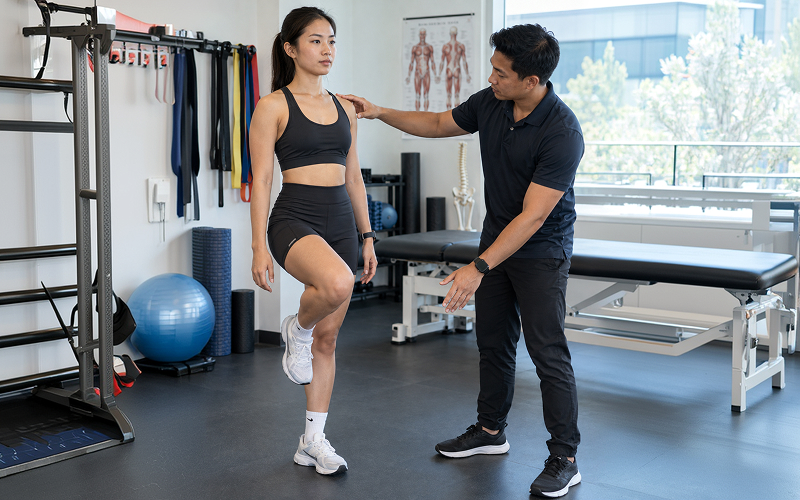
Our ATE™ Method combines Assessment, Treatment and Exercise. During the assessment, we compare how both sides move, note where symptoms appear and consider the daily or training demands involved. What we find then guides what happens next, rather than using the same treatment for everyone.
Take a runner whose right calf consistently feels tighter after training. We may compare ankle mobility, single-leg control and how each leg handles load. If the assessment suggests that limited ankle mobility is causing the calf to work harder, hands-on treatment may focus on the structures restricting that movement. The exercise component might then include movements that build ankle control and improve how the leg manages load.
If the calf itself is experiencing high muscular tension, deep tissue massage may also be appropriate as part of the hands-on treatment. We would then pair it with corrective exercise where needed, so we are not only reducing tension but also addressing the movement findings that may be contributing to it.
For us, that link between assessment, treatment and exercise is important. We are not simply trying to make a muscle feel looser for a day or two. We use what we find during assessment to decide which areas need hands-on treatment and which exercises are most relevant afterwards.
When Should You Seek Professional Assessment?
A slight difference between sides is common and does not always require treatment. It becomes more worth looking into when the same side repeatedly feels tight despite stretching, the difference becomes more noticeable, or the stiffness starts interfering with training, walking, lifting, or everyday movement.
We also look out for signs that the issue may need more than hands-on treatment. Our Recovery Partners, the trained practitioners who carry out our assessments and treatment sessions, are taught to recognise when massage may not be appropriate, when treatment should be postponed, and when a medical assessment may be the safer next step.
Work Out Why One Side Keeps Feeling Tighter
When the same side keeps feeling tighter, the cause is often not one muscle in isolation. A muscle imbalance can develop gradually through daily habits, previous injuries and the way you move, especially when one side repeatedly takes on more work than the other.
At Sports Massage Clinic, we look at the bigger picture. We assess your movement patterns, identify areas of restriction or compensation, and use hands-on treatment and corrective exercise based on our findings.
If stretching or self-massage only gives you temporary relief, book an assessment with us. We can help you understand what may be contributing to the imbalance and put together a practical plan to help you move more comfortably and confidently.