Key Takeaways
- How often you should get a sports massage depends on your activity level, training intensity, physical condition and how your body responds to treatment.
- Athletes undergoing intensive training may benefit from more frequent sessions, while recreational exercisers and office workers may only need occasional treatment.
- Treatment frequency should be adjusted according to changes in mobility, muscle tightness and physical function rather than following a fixed schedule.
- Combining hands-on treatment with corrective exercises, adequate rest and appropriate training loads can help maintain mobility and reduce recurring discomfort.
If your legs feel unusually heavy after a run or your shoulders remain tight between gym sessions, you may start wondering, "How often should you get a sports massage?" While regular sessions can help manage muscle soreness and tightness, getting a massage every week is not necessarily what your body needs.
Someone preparing for a marathon will have different recovery needs from someone who exercises two or three times a week. The appropriate frequency depends on how much physical activity you do, how well your body recovers and whether recurring muscle tightness is starting to affect your movement or performance.
Why Sports Massage Frequency Varies Between Individuals
Even people who participate in the same sport may need different levels of recovery support. For example, two runners covering similar weekly distances might experience very different levels of muscle soreness. One may have gradually built up their mileage and recover comfortably between runs, while the other may have recently introduced hill training or speed sessions, leaving their calves feeling tight and fatigued for several days.
We look beyond how often you exercise to understand how your body responds to physical activity. We consider your training intensity, previous injuries, daily habits and any movement restrictions before recommending a treatment schedule. While sports massage can help relieve muscle soreness and tightness, it works best alongside sensible training progression, adequate rest and strengthening exercises, which play an important role in injury prevention and long-term physical function.
How Often Should You Get a Sports Massage?
The frequency of your sports massage sessions should depend on your activity level, how much physical stress your body experiences and how well you recover between workouts. The following intervals offer a general starting point, although we may recommend adjusting them based on your symptoms, movement assessment and treatment goals.
During High-Volume Training
Suggested frequency: Every one to two weeks, depending on recovery needs.
Athletes preparing for marathons, competitions or other demanding events often experience greater muscle fatigue as their training intensity increases. For example, a marathon runner who adds longer runs and speed sessions may notice persistent calf tightness or reduced ankle mobility, particularly when there is insufficient recovery time between workouts.
During these periods, more frequent sports massage sessions may help ease muscle tension, manage soreness and support muscle recovery. We assess how your muscles respond to training and whether tightness is affecting your movement before recommending treatment. As training intensity decreases or recovery improves, appointments can become less frequent.
For Regular Exercise and Recreational Sports
Suggested frequency: Every three to six weeks, depending on muscle tightness and activity levels.
If you visit the gym several times a week or regularly participate in sports such as badminton, football or tennis, you may experience muscle tension from repeated movements. For instance, someone who lifts weights three times a week and plays badminton on weekends might develop shoulder tightness that makes overhead movements uncomfortable.
Our approach to sports therapy massage considers which muscles are affected, how you move during exercise and whether certain training habits contribute to recurring discomfort. We may also recommend corrective exercises to address movement restrictions between appointments. If your muscles recover comfortably and your mobility remains unaffected, you may not need treatment as frequently.
For General Maintenance
Suggested frequency: Every six to eight weeks, or when needed.
You do not need to be an athlete to experience muscle tightness. Long hours at a desk, repetitive work tasks and limited movement throughout the day can leave your neck, shoulders or lower back feeling stiff.
For example, an office worker who spends most of the day sitting may notice that their neck becomes increasingly uncomfortable towards the end of the week. Occasional sports massage may help relieve this tension and improve comfort during everyday activities.
However, we also consider your working habits, posture and daily movement. Taking regular breaks, changing positions and performing suitable exercises may help you maintain the benefits of treatment without needing frequent appointments.
During Recovery From Injury
Suggested frequency: Based on the type of injury, recovery progress and rehabilitation needs.
Recovering from an injury requires a different approach from routine maintenance. Some individuals may benefit from weekly sessions during certain stages of rehabilitation, while others may need less frequent treatment as their symptoms improve.
For instance, someone recovering from a calf strain may initially experience muscle tightness and difficulty walking comfortably. Once the injury has been assessed and massage is considered appropriate, we may use targeted treatment to address surrounding muscle tension while introducing exercises to gradually restore strength and movement.
As your condition improves, we can space out appointments and focus more on strengthening exercises and self-management. Persistent or worsening pain, swelling or significant weakness should be medically assessed rather than managed through massage alone.
Why Treatment Should Follow Your Body, Not a Calendar
At Sports Massage Clinic, our ATE™ Method combines Assessment, Treatment and Exercise. We review your symptoms, check relevant movements, apply suitable soft-tissue techniques and recommend corrective exercises.
For instance, if knee discomfort has eased but a single-leg squat still feels unstable, scheduling more massage alone may miss an important problem. We may instead focus on strength and movement control, with sports massage treatment playing a supporting role.
A useful follow-up question is whether relief lasts longer and normal activity feels easier. If you need increasingly frequent appointments just to manage the same symptoms, the plan deserves reassessment.
Making Sports Massage Part of Your Recovery Strategy
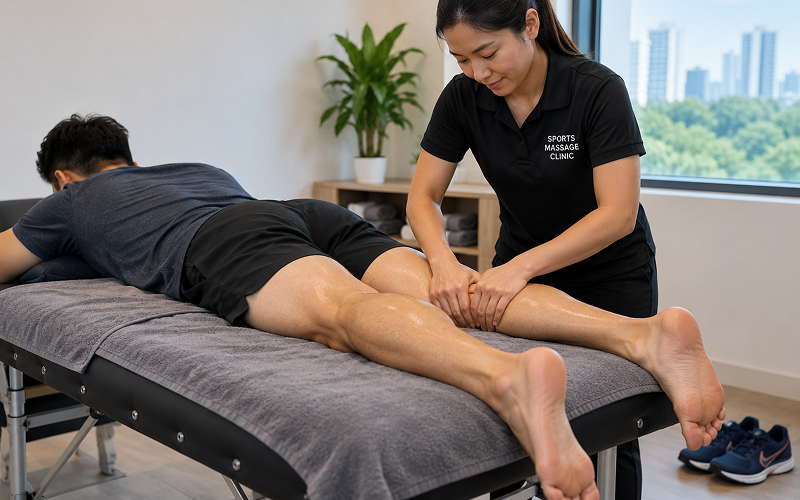
Sports massage can support sports recovery by helping to relieve muscle tightness and soreness, but what you do between sessions is just as important. Getting enough sleep, allowing time for rest and gradually increasing your training intensity all contribute to how well your body recovers. It is also worth paying attention to soreness that lasts longer than usual, discomfort that affects your exercise technique or stiffness that keeps returning after certain activities.
Our sports therapist considers these patterns when planning your treatment. For example, if you regularly experience calf tightness after running, we may combine targeted massage with calf-strengthening exercises and advice on managing your training load. By addressing the factors contributing to your discomfort, we aim to help you maintain comfortable movement and manage your recovery without becoming overly dependent on frequent massage sessions.
Finding a Sports Massage Schedule That Works for Your Body
How often you need a sports massage will depend on your activity level, recovery needs and how your body responds to treatment. You may benefit from more frequent sessions during intensive training or injury rehabilitation, while occasional appointments may be sufficient when you are moving comfortably and experiencing little muscle tightness. Rather than sticking to a fixed schedule, pay attention to changes in your mobility, soreness and physical performance so you can adjust your treatment frequency as your needs change.
Client Profile
At Sports Massage Clinic, we help athletes, fitness enthusiasts and working professionals in Singapore manage muscle tightness, improve mobility and recover from physical strain. Our trained Recovery Partners use the ATE™ Method (Assessment, Treatment and Exercise), combining targeted sports massage with movement assessments and personalised corrective exercises. We focus on addressing the factors contributing to discomfort while helping you maintain better movement and manage recurring muscle problems.
Book an appointment with us to assess your recovery needs and determine a suitable treatment schedule.
Frequently Asked Questions
1. Is weekly sports massage too often?
Not necessarily. Weekly sports massage sessions may be beneficial if you are undergoing intensive training or recovering from an injury, as your muscles may need additional attention during these periods. However, if you recover well between workouts and have little discomfort, you may not need treatment that often. The appropriate interval depends on your physical condition and recovery needs.
2. Should I get a sports massage before or after exercise?
Both can be useful, depending on your goals. A gentle sports massage before exercise may help reduce muscle tension and improve your comfort during movement, while a post-exercise session may help ease soreness. However, deep tissue treatment immediately before an important workout or competition may leave your muscles feeling tender. It is generally better to schedule more intensive sessions away from demanding activities.
3. Can sports massage prevent injuries?
Sports massage may help manage muscle tightness and improve comfort during movement, but it cannot prevent injuries on its own. Effective injury prevention also involves gradually increasing your training intensity, strengthening relevant muscles, getting sufficient rest and addressing movement problems. Massage can be included as part of this broader approach.
4. Do I need another massage if my muscles are no longer tight?
Not necessarily. If you are moving comfortably, recovering well after exercise and experiencing no recurring discomfort, there may be little reason to continue frequent appointments. However, if your training intensity increases or familiar symptoms return, you may benefit from reassessing your recovery needs and adjusting your treatment schedule.