
Key Takeaways
- Effective marathon recovery begins immediately after the race with gentle walking, adequate hydration and nutritious meals to help the body recover from prolonged exertion.
- Prioritising sleep, rest and low-impact activities during the first few days can ease muscle soreness without placing unnecessary stress on recovering joints and tendons.
- Returning to running should depend on how your body responds to everyday movement and light exercise, rather than following a fixed timeline or immediately resuming previous training distances.
- Sports massage and corrective exercises may help address persistent muscle tightness and movement restrictions, while sharp pain, swelling or worsening symptoms warrant professional assessment.
Why Marathon Recovery Matters After Race Day
After completing a marathon or half marathon, even simple activities such as walking downstairs or getting out of a chair can feel surprisingly difficult. Your muscles may be sore, your legs may feel heavy, and your energy levels may remain low even after finishing the race. These are common responses to the prolonged physical demands of long-distance running.
Proper marathon recovery begins as soon as you cross the finish line and continues over the following days and weeks. Giving your body enough time to recover, managing muscle soreness and gradually returning to exercise can help you avoid unnecessary setbacks. The challenge is knowing when to rest, when to start moving again and which symptoms may need further attention.
The First Few Hours After the Finish Line
The first few hours after a marathon or half marathon are an important time to replenish fluids and energy while letting your body settle after prolonged physical exertion. Although you may feel tempted to sit down immediately, a few simple recovery habits can help you manage discomfort and stiffness.
Keep Moving, But Slow Down
After crossing the finish line, continue walking at a comfortable pace for a few minutes rather than stopping abruptly. This allows your heart rate and breathing to settle gradually while helping maintain circulation in your legs.
For example, if you pushed harder during the final kilometres, your legs may feel particularly heavy once you stop. Gentle walking allows you to transition from running to rest without placing additional demands on already fatigued muscles. However, if you feel dizzy, faint or unusually unwell, seek medical assistance rather than continuing to walk.
Replace Fluids and Energy Gradually
Long-distance running depletes energy stores and causes fluid and electrolyte loss through sweating, especially in Singapore's hot, humid conditions. Rehydrating and eating after the race helps your body begin restoring what it has lost.
Drink fluids gradually as you feel thirsty, and include foods or drinks containing electrolytes to replace sodium lost through sweat. Avoid drinking excessive amounts of plain water, as overhydration can also be harmful.
Once your appetite returns, choose a meal containing carbohydrates and protein, such as rice with chicken, eggs or tofu. Carbohydrates help replenish glycogen stores, while protein provides the building blocks needed for muscle repair. Continue eating balanced meals throughout the day rather than relying on a single recovery snack.
Change and Get Comfortable
Remaining in damp running clothes after the race can leave you feeling uncomfortable, especially when moving between Singapore's outdoor heat and air-conditioned environments. Change into dry clothing and comfortable footwear as soon as practical.
If you have a long journey home, avoid sitting in the same position for extended periods. Gently move your ankles, straighten your knees, or change your seated position occasionally to help reduce stiffness and make it easier to move when you reach your destination.
Recovery During the First Few Days
Muscle soreness and fatigue can become more noticeable during the first 24 to 48 hours after a marathon or half marathon. During this period, focus on giving your body enough time to recover while maintaining gentle movement to manage stiffness.
Give Sleep and Rest Priority
Your muscles need time to recover from the repeated impact and prolonged effort of long-distance running. Delayed onset muscle soreness (DOMS) often becomes more noticeable a day or two after the race, particularly in the quadriceps, calves and hamstrings.
Prioritise adequate sleep, regular meals and a temporary break from demanding exercise. Avoid returning immediately to speed sessions, hill runs or heavy lower-body strength training, even if you feel relatively comfortable the morning after your race.
Remember that everyday activities also contribute to physical fatigue. For example, returning to work the next day may involve prolonged standing, commuting or climbing stairs, all of which can place additional demands on post-marathon muscle recovery.
Use Gentle Activity to Check How You Feel
Complete inactivity isn't always necessary in the early stages of running recovery. Gentle, low-impact activities such as walking, easy cycling or swimming may help ease stiffness without placing excessive stress on tired muscles and joints.
However, how much activity you can comfortably manage depends on your race effort, training history, and current symptoms. Someone recovering from a half marathon may feel comfortable taking short walks within a day or two, while a first-time marathon runner may need considerably more rest.
Pay attention to how your body responds during activity and the following morning. If discomfort increases, your movement becomes restricted or you begin limping, reduce your activity rather than pushing through the symptoms.
Ease Tightness Without Forcing It
Gentle stretching, ankle mobility exercises, and light foam rolling may help relieve feelings of tightness during the first few days. However, avoid aggressive stretching or applying excessive pressure to muscles that remain particularly tender.
If you are considering deep tissue massage, the timing and intensity of treatment should reflect your stage of recovery. Applying firm pressure too soon after a demanding race may aggravate already sensitive muscles rather than improve comfort.
We assess muscle tenderness, movement restrictions and any areas of discomfort before determining an appropriate treatment approach. Our aim is to help manage excessive tension while allowing your body sufficient time to recover naturally.
Returning to Running Safely
One of the most common mistakes after a marathon or half marathon is returning to regular training as soon as muscle soreness subsides. However, feeling less sore does not necessarily mean your muscles, tendons and joints are ready to handle the same training demands as before the race.
Before resuming running, assess how comfortably you can perform everyday activities. You should be able to walk briskly, climb stairs and move without limping or experiencing localised pain. If these activities still cause discomfort, your body may need additional recovery time.
When you feel ready, begin with a short, easy-paced run or a combination of walking and jogging. Avoid immediately returning to hill training, speed sessions or long-distance runs. Pay attention to how your body responds during exercise and over the following 24 hours, particularly whether soreness, stiffness or fatigue increases.
For example, if you usually run four times a week, consider starting with one short, comfortable session before gradually increasing your training frequency and distance. Your previous training experience, race intensity and current physical condition should guide this progression.
Effective marathon recovery requires patience, as returning to running too quickly can put unnecessary stress on tissues that haven't fully recovered. Gradually rebuilding your training load is an important part of running injury prevention and helps your body adapt to regular exercise again.
Supporting Recovery Beyond Race Week
Some runners experience lingering muscle tightness or discomfort even after their initial soreness improves. We use our Assessment, Treatment and Exercise (ATE) approach to identify movement restrictions, muscle imbalances and areas that may have been overloaded during training.
For example, a runner experiencing recurring calf tightness and heel pain may have restricted ankle mobility or difficulty loading the calf muscles. We assess these factors rather than focusing solely on the painful area, helping us determine an appropriate recovery approach.
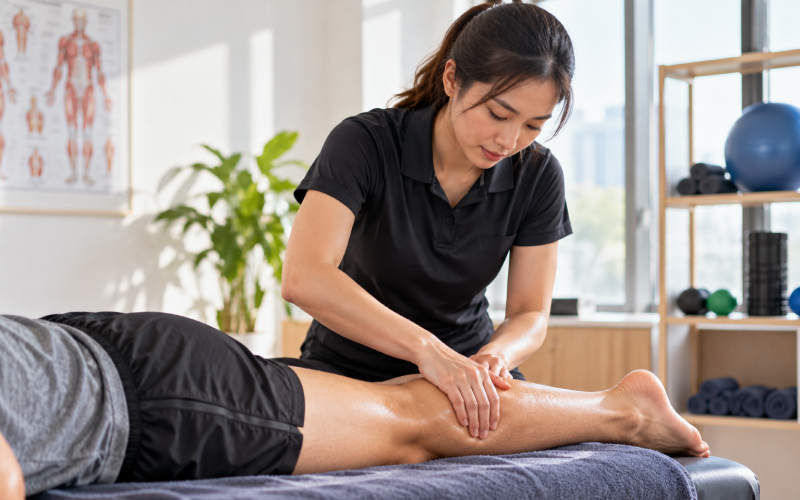
Our sports therapy massage may help relieve muscle tension, while corrective exercises address identified strength and movement limitations. Working with a sports therapist can also help you manage discomfort as you gradually return to regular training.
When Does Post-Race Soreness Need Assessment?
General muscle soreness after a marathon usually affects larger muscle groups and gradually improves over several days. However, sharp or localised pain, persistent swelling, joint instability, or symptoms that worsen with activity may indicate an injury that requires professional assessment.
For example, recurring pain behind the ankle when walking or running may suggest an Achilles tendon problem rather than ordinary muscle fatigue.
Seek urgent medical attention if you experience an inability to bear weight, severe muscle pain accompanied by dark urine, sudden calf swelling or breathlessness.
Recover Well Before Returning to Your Running Routine
Effective marathon recovery requires balancing adequate rest with a gradual return to physical activity. Prioritising sleep, nutrition and gentle movement during the early stages allows your body time to recover before taking on more demanding exercise.
Pay attention to how your body responds as you increase your training load. Addressing persistent discomfort or movement restrictions early can help reduce the risk of setbacks and support a more sustainable return to running.
Client Profile
At Sports Massage Clinic, we help runners manage muscle tightness, improve mobility and recover from the physical demands of long-distance running. Our RunFit Therapy combines targeted sports massage, movement assessments and corrective exercises to address discomfort in the calves, hips, knees and ankles. We tailor each session to your symptoms, activity level and recovery goals.
Book a session with our team to support your return to running.
Frequently Asked Questions
1. How long should I rest after a marathon?
Recovery time varies depending on your fitness level, training history and race intensity. Take several days off from demanding exercise and prioritise rest, sleep, and gentle movement. Before returning to running, make sure you can walk comfortably and perform everyday activities without significant pain or stiffness.
2. Is sports massage helpful immediately after a race?
Gentle sports massage may help relieve muscle tightness and discomfort after a marathon. However, deep tissue massage immediately after a demanding race may aggravate sensitive muscles. A therapist can assess your condition and recommend an appropriate treatment intensity based on your recovery needs.
3. Can I run if my legs are still sore?
Mild muscle soreness does not necessarily mean you must avoid all physical activity. However, it is generally better to begin with low-impact exercises such as walking or cycling. If you experience sharp pain, limping, or worsening discomfort, avoid running until a professional has assessed your symptoms.
4. Should I stretch my legs every day after the race?
Gentle stretching and mobility exercises may help ease stiffness, particularly around the calves, hamstrings and hips. However, daily stretching is not essential for recovery. Avoid forcing movements or stretching through pain, especially when your muscles remain particularly tender after the race.