Key Takeaways
- Common pickleball injuries often affect the ankles, calves, elbows, shoulders, knees, and lower back because of repeated swings, lunges, and rapid changes of direction.
- Pain that keeps returning after play may be linked to movement restrictions, reduced strength, or a sudden increase in playing volume rather than the painful area alone.
- Gradually increasing court time, wearing suitable footwear, and building strength and mobility can help the body cope better with repeated match demands.
- Persistent pain, swelling, weakness, or reduced movement should be assessed early so the contributing factors can be identified before the problem becomes harder to manage.
Introduction
Pickleball can look fairly easy on the body, especially compared with sports that involve more running or contact. But a typical game still involves plenty of quick stops, short sprints, side-to-side movement, repeated swings and awkward reaches for low or wide shots. Over time, that can put strain on the ankles, calves, knees, shoulders and elbows.
When we assess pickleball players, the sore area is not always the only issue. Someone with elbow pain, for example, may also have tightness through the forearm or limited shoulder movement that changes how they swing. Looking at these patterns can help explain why certain common pickleball injuries keep returning and what may need to change to reduce the risk of further problems.
Common Pickleball Injuries
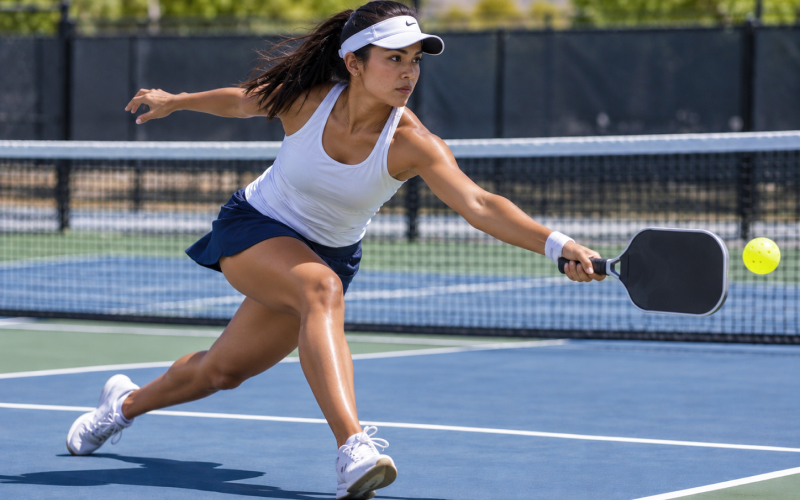
The common pickleball injuries associated with the sport can affect both the upper and lower body. Quick changes of direction, repeated gripping, overhead shots, lunging, and falls can stress the ankles, knees, calves, wrists, elbows, and shoulders.
Ankle Sprains
An ankle sprain can happen in an instant, especially during a quick side step, sudden change of direction or awkward landing. Reaching for a wide shot can also leave the ankle in a vulnerable position if your weight shifts faster than your foot can adjust.
One pattern we may see is a player who feels comfortable moving forwards but becomes less stable when stepping sideways or recovering from a lunge. Limited ankle mobility, reduced single-leg control or fatigue can all make those movements harder to manage.
For ankle sprain recovery, waiting for the pain to settle is only part of the process. Regaining ankle movement, calf strength, balance, and confidence during direction changes can help you return to the court with better control.
Knee Pain and Strains
The knees absorb repeated load during lunges, quick stops and changes of direction. Discomfort may develop gradually after longer sessions or appear more suddenly if the knee twists or the player loses balance.
We may see someone who can walk normally after a game but repeatedly develops pain during deep lunges or when pushing back up from a low position. In these cases, we would look at knee movement alongside hip and ankle control, lower-limb strength and how the player manages load during play.
Recurring symptoms should not automatically be treated as a problem with the knee alone. Where muscle tension or restricted movement contributes, knee pain massage may be used alongside mobility work, joint mobilisation and strengthening exercises.
Tennis Elbow
Repeated gripping and swinging can irritate the tendons on the outside of the elbow, particularly if you are playing more often, gripping the paddle too tightly or relying heavily on the forearm during each stroke.
A common pattern is mild discomfort that appears only after a longer game at first. As the irritation builds, the pain may start earlier and show up during everyday tasks such as carrying a bag, opening a jar or lifting a cup.
When we assess this, we do not focus only on the elbow. Forearm tension, grip strength, shoulder mobility and the way you swing can all affect how much load reaches the area. Persistent symptoms may benefit from elbow pain treatment to identify what is contributing to the repeated irritation.
Wrist and Hand Injuries
The wrist and hand also work continuously during pickleball because every shot requires gripping, controlling and repositioning the paddle. A fall onto an outstretched hand can place considerably more force through these areas.
Pain may appear during gripping or twisting, while swelling, tenderness or reduced movement after a fall deserves closer attention. Rather than assuming symptoms are coming from the wrist alone, an assessment can help determine whether the wrist, hand, forearm or another structure is involved.
Persistent discomfort during gripping or paddle control may warrant wrist pain treatment so the source of the symptoms can be assessed properly.
Achilles Tendon and Calf Injuries
Your calves and Achilles tendon work every time you accelerate, stop or push off towards the net. Problems often appear when playing frequency increases faster than the lower leg can adapt.
For example, someone who has gone from one casual game a week to several sessions may begin to notice recurring calf tightness or soreness above the heel. In that situation, stretching alone may not address the full problem.
We would also look at ankle movement, lower-leg strength and how you push off during play. If the same area keeps tightening or becoming painful, those movement and loading patterns may need attention before you continue increasing your court time.
Shoulder and Rotator Cuff Injuries
Overhead shots and repeated reaching can place significant demand on the shoulder, especially when the arm is moving near the end of its comfortable range. A rotator cuff injury may cause pain or weakness when lifting the arm, reaching overhead or swinging the paddle.
Some players first notice discomfort only during overhead shots. Later, the same shoulder may hurt when reaching into a cupboard, putting on a shirt or lying on that side at night.
In these cases, we assess shoulder range, strength and shoulder-blade control rather than repeatedly treating the sore area alone. Persistent pain during overhead movement may warrant shoulder pain treatment to identify which movements or tissues are being overloaded.
Lower Back Pain
Pickleball involves repeated bending, twisting and rotation, often while reaching for a ball that is low, wide or slightly behind you. These movements can become more demanding as fatigue builds.
A player may feel fine during the first few games but notice increasing lower back stiffness later in the session. Limited hip mobility or reduced trunk control can sometimes cause the lower back to take on more movement than it should.
When we assess this type of pain, we look at hip movement, trunk control and the way you bend and rotate during play. That gives us a better picture of what may be contributing instead of treating the back as an isolated problem.
Why Pickleball Injuries Are Becoming More Common
Many sports injuries develop when playing time increases faster than the body can adapt. Someone who goes from an occasional game to several sessions a week may suddenly be doing far more lunging, stopping, reaching and swinging than before.
Players can feel fit enough to continue while their joints, muscles and tendons are still adjusting to the specific demands of the sport. The issue is often the jump in volume and repetition rather than pickleball itself.
Previous injuries can add to the strain. An ankle that never fully regained mobility after an old sprain or a shoulder that already feels restricted may cope reasonably well at lower volumes, then start causing problems once matches become longer or more frequent. This load-management framing was one of the strongest parts of the reviewed draft.
Reducing Your Risk Through Better Movement and Recovery
Good pickleball injury prevention starts before pain appears. A brief stretch before a game can help you feel looser, but it does not fully prepare the body for repeated lunges, quick direction changes and overhead movements.
Footwear matters because pickleball involves frequent side-to-side movement. Court shoes with suitable lateral support can provide better stability than shoes designed mainly for straight-line running. It also helps to increase playing time gradually, especially if you are new to the sport or returning after a break.
Your warm-up should prepare the movements you are about to use. Controlled lunges, lateral steps, shoulder movements and calf raises can be more relevant than relying on static stretching alone.
Strength work between games can also improve how well the body handles repeated load. Single-leg exercises, calf strengthening, shoulder work and trunk stability exercises can support better control during faster movements on court.
Recovery matters too. If the same area feels sore or tight after every session, give it time to settle rather than repeatedly playing through the discomfort. Ongoing symptoms may be a sign that your current playing volume, movement quality or recovery routine needs to be adjusted.
Why Identifying Movement Restrictions Matters
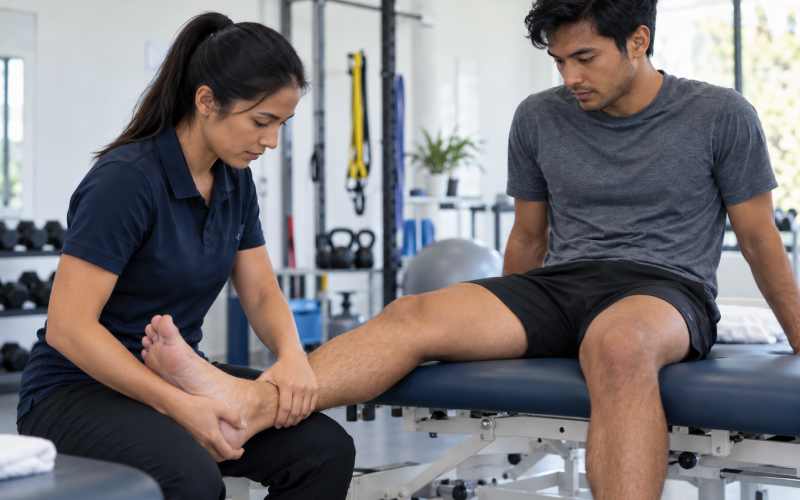
At Sports Massage Clinic, we use our ATE™ Method: Assessment, Treatment and Exercise. We start by looking at how you move, where you feel restricted and what activities tend to bring on the problem. Based on what we find, we may use targeted hands-on treatment before introducing corrective exercises to improve mobility, control and strength.
This matters because the area that hurts is not always the only area involved. Elbow pain, for example, may be affected by forearm tension or limited shoulder movement, while recurring knee discomfort may be linked to restrictions at the hip or ankle.
By identifying these patterns early, we can focus treatment on the movements and areas that are contributing to the problem instead of repeatedly treating the same sore spot without addressing why it keeps returning.
When Should You Seek Professional Assessment?
Pain that keeps returning after each game is worth paying attention to, especially if it starts changing how you move, how long you can play or which shots you avoid.
You should consider an assessment if you notice ongoing stiffness, repeated muscle tightness, swelling, weakness or reduced confidence in a particular movement. These signs may point to an underlying issue that is not settling with rest alone. Sudden severe pain, major swelling, numbness, marked weakness or an inability to bear weight should be assessed medically without delay.
Conclusion
Common pickleball injuries often come from the same movements that make the sport enjoyable, including quick changes of direction, repeated rallies and frequent reaching.
If pain keeps returning, Sports Massage Clinic can assess how you move, identify areas of restriction or overload and determine whether sports massage and corrective exercise are suitable for your recovery. Book an assessment with our recovery partners to address recurring discomfort before it starts affecting how often or how confidently you can play.